
Corebound
OvercurveAction
4.82.23K Reviews
- Version
- 1.2.0.1
- Installs
- 1.00M
- Age Rating
- Everyone
Screenshots

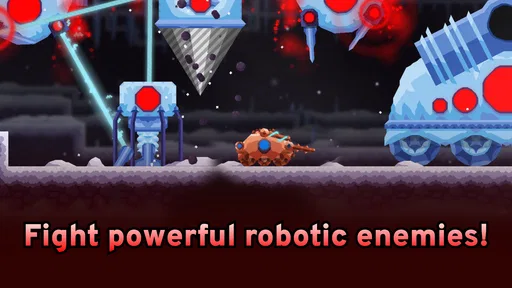
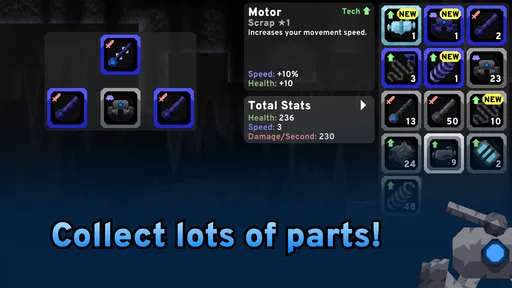
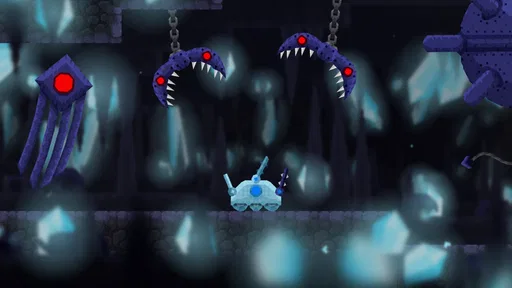
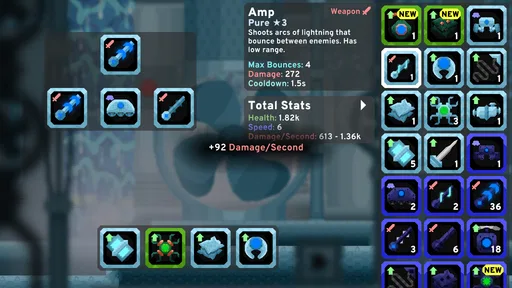


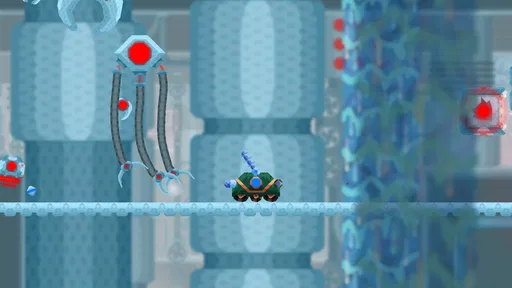
Our Review of Corebound
 Analysis by Appyee
I spent time with Corebound as a quick-action game built around a simple but appealing loop: fight robots, gather what they leave behind, and use those parts to make the next run stronger. That idea is easy to understand within minutes, but the real question is whether the upgrade chase stays enjoyable or starts feeling like a reason to spend. My overall impression is positive, especially if you like compact combat sessions and visible character improvement, although I would approach it as a free game with optional purchases rather than as a completely frictionless experience.
Created by Overcurve, this Android action game is free to start and aimed at Everyone. It has already passed one million installs, with an average score of 4.8 from around thirty-nine thousand ratings and roughly two thousand reviews. Those numbers suggest that the basic formula connects with a broad audience, but they do not remove the need to look at how the progression feels in actual play. For me, the strongest part is the satisfying relationship between destruction and improvement: every robot encounter feels connected to the next upgrade instead of being an isolated fight.
How the robot-hunting loop feels in practice
I look at each robot encounter as a small test of whether my current approach is working, not just another chance to collect parts. That makes it easier to notice when a fight feels slow because I need a better upgrade, or when I simply need to handle the encounter more carefully. The next section turns to the spending choices behind that progression and the signals I would watch before paying.
A clear reason to keep moving
The best thing about the design is that the combat and collection goals point in the same direction. I am not destroying robots simply to watch a score rise. I am doing it because their parts represent future strength. That gives even a short session a practical purpose. When I have only a few minutes, I can still enter, clear some enemies, collect useful materials, and leave with the sense that the character has moved forward.
This structure works particularly well for players who enjoy action games with a light progression layer. It is less demanding than a large role-playing game, where I may need to remember several quests, equipment sets, currencies, and long-term objectives. Corebound keeps the motivation closer to the action: defeat machines, recover components, and improve the fighter. That direct connection makes it easy to return after a break without having to relearn a complicated system.
There is also a psychological advantage to collecting parts from the enemies I have just defeated. The reward feels attached to the action rather than handed out at random. I can mentally connect a difficult encounter with the upgrade it helped fund. That makes the loop more satisfying than a combat game where rewards feel disconnected from what happens on screen.
Where the pressure begins
The same loop can create pressure if progression becomes too dependent on repeated battles. A player who enjoys steady improvement will probably accept some repetition, but someone looking for constant variety may find the routine narrow. The central activity remains robot destruction and collection, so the experience depends heavily on whether that core action continues to feel good after the novelty fades.
I also think the upgrade structure changes how the game should be approached. Instead of treating every fight as a race to become powerful as quickly as possible, I found it more sensible to regard each session as a small investment. A short run does not need to produce a dramatic transformation. It only needs to contribute enough parts to make the next attempt a little more comfortable. That mindset reduces the temptation to push through when the game starts feeling repetitive.
A useful habit is to decide before playing whether I am testing combat or farming progress. If I am trying to understand how the action feels, I pay attention to movement, timing, and enemy pressure. If I am collecting parts, I accept that the session may be more routine. Separating those goals helps me judge the game fairly instead of expecting every moment to provide a new surprise.
Upgrades are more than a reward screen
The upgrade system is important because it determines whether collected parts feel meaningful. In a game like this, a good improvement should change how confidently I approach the next group of robots, not merely add a number that is difficult to notice. I recommend paying attention to which improvements solve a problem I am actually experiencing. If encounters feel slow, an offensive improvement is more useful than blindly choosing the most expensive option. If survival is the issue, durability has a clearer practical value.
This sounds obvious, but it is an easy mistake to make in a fast action game. The most visually attractive upgrade is not always the one that improves a weak point. I got better results by treating each defeat as information. If I was overwhelmed because I could not finish enemies quickly enough, I changed my priority. If I was taking too much damage while collecting parts, I looked for a more defensive answer. That makes the progression feel more strategic without requiring a complicated build guide.
Another worthwhile approach is to avoid spending every resource immediately. Keeping a small reserve gives me flexibility when a later improvement fits my play style better. This is especially useful for players who are still learning what kind of combat rhythm they prefer. Spending everything as soon as possible can make progress feel efficient, but it can also remove the ability to respond to a new difficulty spike.
What a normal daily session looks like
For an everyday example, I can see Corebound fitting into a commute, a break between tasks, or the few minutes before bed. I would start with one focused goal, such as gathering enough parts for an improvement or checking whether a previous upgrade makes a difficult encounter easier. After the session, I would stop rather than continue automatically just because progress is available. That keeps the game in the role of a small action break instead of letting it become an endless obligation.
This approach is also helpful for younger players because the objective is easy to understand. The Everyone rating makes the game broadly accessible, and the robot-focused theme is more mechanical than realistic. Still, parents should remember that free games with optional purchases can create a different kind of pressure from the combat itself. The age rating describes suitability, not how each person will respond to upgrade offers or repeated progression.
Spending, fairness, and what I would watch
Before spending, I would want to know whether a purchase solves a lasting problem or merely makes one frustrating session feel easier. I would compare its appeal with the satisfaction of earning parts through ordinary play, then give myself time to decide rather than buying in the heat of a difficult run. That perspective leads naturally to the question of how fair the progression feels without paying.
The purchase context is clear, but limited
Corebound is free to download, while its in-app purchases range from $4.99 to $49.99 per item. That is the key financial fact I would want a new player to know before starting. The range covers a meaningful difference between a small optional purchase and a much larger one, so I would not recommend entering the game without deciding how I want to handle spending.
I appreciate that the free entry point lets me test the combat before committing money. I can find out whether destroying robots and collecting parts is enjoyable for me, rather than paying first and discovering that the loop is not a fit. At the same time, the presence of purchases means I would avoid assuming that every improvement path will feel equally fast without spending. The sensible choice is to play long enough to understand the normal rhythm before deciding whether any purchase has genuine value.
I would also be careful with the phrase “become unstoppable.” It works as a description of the fantasy behind the progression, but I would not read it as a promise that every player reaches the same power level at the same pace. In practice, the enjoyable part is the gradual feeling of control. If I expect instant dominance, I am more likely to see normal progression as a delay rather than as part of the game.
How to avoid spending pressure
My first recommendation is to play without buying anything until I know what the parts are doing for my experience. I would ask myself three questions: am I enjoying the fights, do upgrades noticeably improve my decisions, and am I considering a purchase because it adds enjoyment or because I feel stuck? Those questions separate a useful optional purchase from an impulse caused by frustration.
A second tip is to set a personal spending rule before opening the shop. For example, I might decide that the game remains free unless I have played enough to know I will return to it. I would also avoid making a purchase immediately after a difficult loss. Waiting until the next day is a simple way to check whether I actually want the item or merely want to remove the feeling of being blocked.
For families, I would treat the spending controls on the device as part of the setup. The Everyone rating does not make purchase management unnecessary. A child may understand the robot battles perfectly well while still not understanding that an upgrade has real financial consequences. Clear limits are more reliable than expecting the game itself to create that boundary.
Can free players compete fairly?
There is an important distinction between personal progression and competition. If I am mainly trying to improve my own performance, optional purchases matter less because my goal is to make each run better than the previous one. If the game places players into rankings or other competitive situations, spending could matter much more. I would not assume that a strong rating proves competitive fairness; popularity and fairness are separate questions.
My practical advice is to judge the game first as a personal action experience. If I enjoy it without comparing my progress with anyone else, the purchase system is easier to keep in perspective. If my enjoyment depends on matching players who spend more, I would be more cautious. A different action game with a clearly skill-first competitive structure may be a better choice for someone who wants every victory to depend primarily on execution.
The fairest way to approach Corebound is to focus on whether upgrades help me express better decisions rather than simply erase difficulty. If an improvement lets me handle robots more intelligently, it supports the action. If progress becomes valuable only because it skips repetition, the spending question becomes more uncomfortable. That is the line I would monitor during longer use.
What I would compare it with
Compared with a traditional premium action game, Corebound is easier to try because there is no purchase barrier at the beginning. The trade-off is that free-to-play progression can feel less predictable than a game where all abilities are available through one upfront payment. Players who want a self-contained experience with no shop-related decisions may be happier with a paid alternative.
Compared with a large action role-playing game, this title is more approachable. I do not need to commit to a huge world or manage an extensive story before reaching the central activity. That makes it a better match for short sessions. The trade-off is depth: anyone looking for a broad narrative, elaborate exploration, or a large collection of distinct combat systems may find the robot-focused loop too concentrated.
It also differs from a purely score-based arcade game. The parts and upgrades give me a longer-term reason to return, while an arcade alternative may offer cleaner competition based on immediate performance. Corebound is the better fit when I want action to leave a lasting mark on the character. A score-chasing game is preferable when I want every session to stand on its own without progression influencing the next attempt.
Questions I would still consider before installing
One question is whether the game works for someone who dislikes repetition. My answer is conditional. If I enjoy repeating a familiar action while gradually becoming stronger, the loop has a clear appeal. If I need frequent changes in setting, enemy behavior, or objective, I would test it briefly and avoid treating the upgrade promise as enough reason to stay.
Another question is whether it is suitable for a younger player. The Everyone rating and mechanical robot theme make it broadly accessible, but I would still supervise spending. I would explain that parts and upgrades are part of the game’s progression and that optional purchases are separate from simply playing. That conversation matters more than the rating alone.
A third question is whether the current version is worth trying. The listed version is 1.2.0.1, and the game runs on Android 7.1 or later. That makes it available to many older Android devices, which is useful if I am not using a recent phone. I would still keep expectations realistic on older hardware: compatibility does not guarantee that every device will feel equally smooth during action-heavy moments.
I would also ask whether the game is right for someone who wants a completely transparent purchase experience. The known price range tells me that optional items exist at several spending levels, but it does not by itself answer how much they influence progress. For that reason, I would play first, observe the normal pace, and make a decision based on my own tolerance for repetition rather than assuming purchases are either harmless or essential.
My trust verdict
After looking at the combat loop, the collection motivation, and the spending context together, I see Corebound as a worthwhile free action game for players who like turning enemy drops into gradual power. Its strongest quality is focus: the robot battles and the upgrade chase support one another, so I always understand why the next encounter matters. The game is easy to approach, works for short sessions, and does not demand the commitment of a larger role-playing adventure.
My reservations are equally specific. The experience may lose appeal if repeated robot fights stop feeling satisfying, and the optional purchase range means I would not treat the game as financially neutral just because the download is free. I would be especially careful if my motivation comes from keeping up with other players rather than enjoying personal improvement. In that situation, a more explicitly skill-based action game could be a better match.
For me, the right way to play is deliberately: start free, learn which upgrades solve real combat problems, keep a spending boundary, and stop a session when the loop becomes routine instead of forcing more progress. If that sounds like a comfortable rhythm, Corebound is easy to recommend as a compact robot-smashing game. If you want a fully paid experience with no purchase pressure or a deep competitive system where money is clearly irrelevant, I would choose another option instead.
Overcurve has built a straightforward action premise with enough progression to make ordinary fights feel useful. I would install it for the satisfying cycle of breaking machines, collecting parts, and testing whether the next improvement changes my approach. I would not install it expecting unlimited variety or an automatically fair competitive environment. My final recommendation is to try it as a free personal-progression game, not as a promise of instant power or a substitute for a premium action adventure.
Verdict
Strengths of Corebound
- Atmospheric visuals create a memorable dark-fantasy experience.
- Exploration rewards curiosity with hidden areas and discoveries.
- Combat encounters feel tense without becoming overly complicated.
- The game’s world-building encourages players to uncover its mysteries.
- Suitable for players who enjoy focused, story-driven adventures.
Limitations of Corebound
- Some sections may feel slow for players seeking constant action.
- The dark presentation can make certain details difficult to notice.
- Limited guidance may leave players unsure where to go next.
- Replay value may be modest after the main story is completed.
- Performance can vary depending on the device and graphics settings.
Similar Picks in This Category
View All
Temple Run 2: Endless Escape
Imangi Studios4.1

PUBG MOBILE
Level Infinite4.3

Free Fire: 9th Anniversary
GARENA INTERNATIONAL I4.4

Talking Tom: Hero Dash Run
Outfit7 Limited4.3

slither.io
Lowtech Studios3.9

Sniper 3D:Gun Shooting Games
Wildlife Studios4.6
Frequently Asked Questions
What is Corebound, and what kind of game is it?
Corebound is an adventure-focused game built around exploration, progression, and discovering what lies beyond the starting area. During our review, the experience felt aimed at players who enjoy learning through experimentation rather than following a completely linear path. You can expect challenges, environmental discovery, upgrades, and moments that reward patience. Before downloading, remember that the exact gameplay experience may vary depending on the platform and version available.
Is Corebound free to download and play?
Before installing Corebound, check the store listing carefully because the pricing model can depend on the platform, region, and current release version. Some games are free to download but include optional purchases, while others require a one-time payment. We also recommend reviewing the in-app purchase information and checking whether any important content is locked behind payments. This helps avoid surprises after installation.
Does Corebound require an internet connection?
Corebound may offer gameplay that can be enjoyed without a constant connection, but online requirements can differ between features and versions. An internet connection may still be necessary for the initial download, updates, account synchronization, cloud saves, advertisements, or online-related content. If you plan to play while traveling or with limited data, confirm the latest store description and test the game once before relying on offline access.
What devices are compatible with Corebound?
Compatibility depends on whether you are downloading Corebound for Android, iPhone, iPad, or another supported platform. Before downloading, compare the app’s listed operating-system requirements with your device and make sure you have enough free storage for installation and future updates. Older phones or tablets may experience slower loading, reduced graphics quality, or performance issues even when the application technically installs successfully.
Is Corebound suitable for children and casual players?
Corebound can be approachable for players who enjoy exploration and gradual progression, but its suitability depends on the player’s age, patience, and familiarity with adventure games. Some sections may involve difficult challenges, repeated attempts, or themes that are not intended for very young children. Parents should review the official age rating, content descriptions, privacy information, and any purchase options before allowing a child to download it.
Play our best games!


